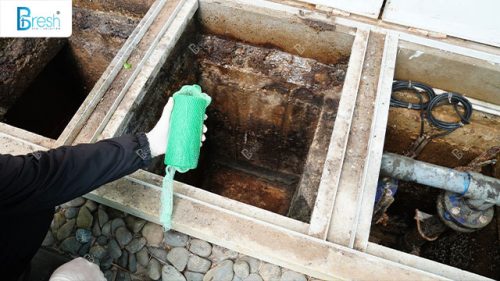
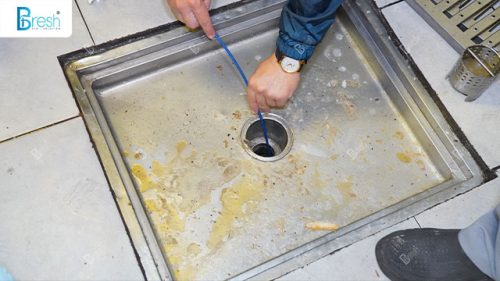
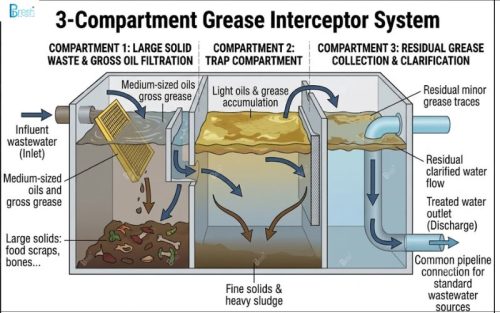
According to statistics, up to 80% of drain blockages are caused by grease. When poured down the drain, grease forms a thick layer that clings tightly to the pipe walls, obstructing the flow of wastewater. So, how do youtreat grease in drains? Join BioFix Fresh as we explore simple, effective methods for treating grease in drains in this article.
Grease management in sewers
Causes of grease buildup and clogs in sewer pipes
Drain blockages caused by grease are a common problem in homes, restaurants, eateries, resorts, hotels, and other establishments, and they cause a great deal of inconvenience. Here are some of the main causes of this problem:
- Pouring grease and food scraps directly down the drain: This is the most common cause. Grease from cooking and grease from food scraps pour down the drain and solidify as they cool, sticking to the pipe walls and gradually building up, causing clogs.
- Improper pipe design: Pipes that are too small, have too many bends, or have an inappropriate slope are prone to clogging.
- Using the wrong cleaning agents: Some cleaning chemicals can react with grease, forming deposits that cause blockages.
See also: Why is it important to treat industrial wastewater?
What harm can grease buildup and clogs cause?
Clogged drains caused by grease not only cause inconvenience in daily life but also pose other potential hazards.
- Health effects: Standing wastewater creates ideal conditions for bacteria to multiply, leading to gastrointestinal and respiratory illnesses.
- Environmental pollution: Wastewater containing grease and oil discharged into the environment pollutes water sources, soil, and the air.
- Causes unpleasant odors: Clogged pipes produce unpleasant odors, affecting the quality of life for every household and the operations of service establishments.
- Costly: Pipes that remain clogged for long periods of time put strain on the wastewater treatment system and can lead to pipe bursts. Clearing grease blockages in pipes is both costly and time-consuming.
Effective and simple ways to deal with grease in drains
How can you deal with this problem effectively, simply, and quickly? Let’s take a look at the following methods for removing grease from drains.
Removing grease from drains using a mixture of lemon, salt, vinegar, and dish soap
A mixture of lemon, salt, vinegar, and dish soap is one of the most effective natural methods for removing grease from drains. When combined, these ingredients create a mildly acidic solution that helps break down the fats and grease clinging to the inside of the pipes.
Preparation
- 1 lemon
- 2 tablespoons of salt
- 1/2 cup white vinegar
- 1 tablespoon of dish soap
- 4 liters of hot water
Steps to follow
- Step 1: Cut the lime, remove the seeds, and squeeze out the juice.
- Step 2: Dissolve the mixture of lemon, salt, vinegar, and dish soap.
- Step 3: Pour about 2 liters of hot water down the drain.
- Step 4: After about 5 minutes, pour the mixture of lemon, salt, vinegar, and dish soap down the drain and wait for about 30 minutes to 1 hour.
- Step 5: Finally, pour another 2 liters of hot water down the drain to flush away the debris.
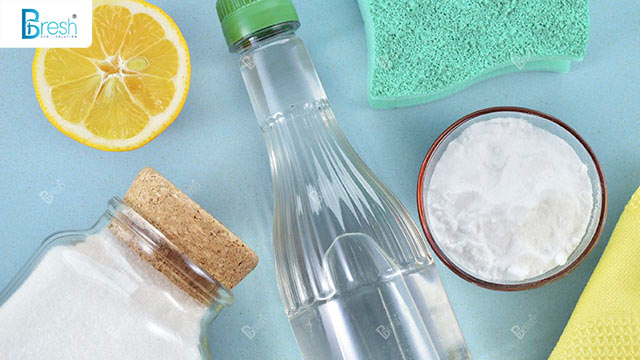
How to Remove Grease from Drains Using Lemon, Salt, Vinegar, and Dish Soap
Use hot water to remove grease from a clogged drain
Using hot water to remove stubborn grease and grime from drain pipes is a simple yet effective method. The high temperature helps soften and break down the structure of the fats, allowing them to flow easily down the drain.
Preparation
- About 4 liters of hot water (about 80°C)
- A little dish soap
Steps to follow
- Step 1: Bring about 4 liters of water to a boil, add a little dish soap, and stir well.
- Step 2: Slowly pour hot water into the clogged drain, then cover the drain opening tightly to prevent steam from escaping.
- Step 3: Wait about 15–20 minutes to allow the hot water time to soften and dissolve the grease in the drain.
- Step 4: Then, run cold water through the pipe to cool it down.
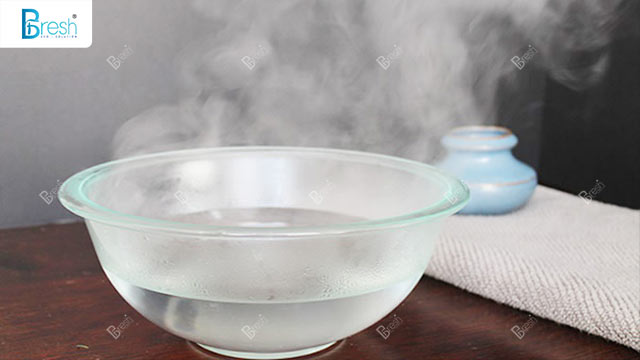
Removing grease from drains with hot water
Use a mixture of baking soda and vinegar to remove grease from the drain
A mixture of baking soda and vinegar is a common and safe method for removing grease from drains. When combined, these two ingredients create a chemical reaction that releases carbon dioxide, which helps break down the layers of grease clinging to the pipe walls.
Preparation
- 1/2 cup baking soda
- 1 cup white vinegar
- Hot water
Steps to follow
- Step 1: Pour baking soda directly into the clogged drain, then pour white vinegar directly on top. You’ll see the mixture fizz vigorously; use a cloth to cover the drain opening for about 15–20 minutes to let the mixture work.
- Step 2: Finally, rinse with hot water to wash away the dirt.
Note: You can adjust the amounts of baking soda and vinegar depending on how clogged the drain is. However, do not pour in too much of the mixture, as it may cause it to back up.
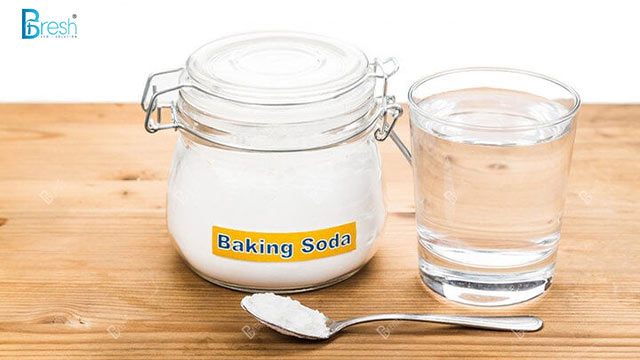
Removing grease from drains with baking soda and vinegar
Chemical treatment of grease in drains
Specialized drain-cleaning chemicals contain ingredients that quickly break down grease and other debris in pipes. However, you must strictly follow the instructions for use and wear gloves, a mask, and safety goggles to ensure safety and effectiveness.
Preparation
- Specialized drain-cleaning chemicals available on the market
Steps to follow
- Step 1: Measure out the appropriate amount of the chemical according to the instructions on the product packaging.
- Step 2: Pour the chemical down the drain and leave it overnight.
- Step 3: The next morning, flush the drain with a strong stream of water to clean it and remove grease from the drainpipe.
Note: Frequent use of drain-cleaning chemicals can damage pipes. In some cases, it is necessary to combine the use of chemicals with mechanical methods, such as using a coat hanger or a drain snake, to improve the effectiveness of grease removal.
See more: Using grease traps for highly effective wastewater treatment
Use a specialized microbial product to treat grease in drains
People are becoming increasingly concerned about environmental protection, so the use of microbial products to treat grease in drains has also become widespread. This is an effective, safe, and environmentally friendly solution.
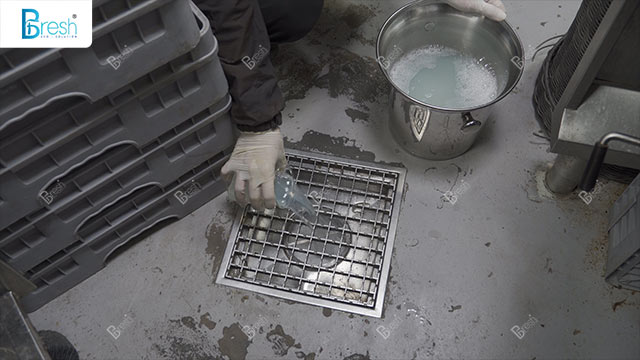
Biological treatment of grease in sewers
How microbial grease treatment works in sewers
Microbial products designed to treat grease in sewer lines contain specialized natural bacteria capable of breaking down grease, fats, and other organic matter into water and CO₂. When introduced into the drainage system, these bacteria attach themselves to the pipe walls, consuming the grease to grow and multiply.
Advantages of the microbial method for treating grease in sewers
- Safety: A completely natural microbial product that is harmless to human health and the environment.
- Long-lasting effectiveness: Thoroughly breaks down grease and oil, preventing recurring clogs. Creates a balanced microbial ecosystem in the drainage system, helping to keep pipes clean.
- Cost-effective: Just use it periodically in small doses to maintain long-lasting results.
BioFix Fresh’s microbial products for treating grease in drains
BioFix Fresh offers environmentally friendly microbial products for treating grease in drains that are safe for users and highly effective at breaking down grease. You can review and choose from the following products:
- GT-1202 microbial product: Specifically designed to treat oils and fats in industrial and residential drainage systems.
- BAC GTT-1204 microbial product: Rapidly breaks down organic matter and minimizes unpleasant odors.
Some microbial products for treating grease in drains
How to use
The method for using microbial products varies depending on the specific product. You should dilute the product with water according to the specific ratio indicated on the packaging, then pour it directly into the drainage system.
Note:Please read the instructions carefully to ensure proper use and achieve the best results. To maintain effectiveness, you should use the microbial product for treating grease in drains regularly as recommended by the manufacturer and combine it with other measures to achieve the best results.