Dưới đây là bản dịch tiếng Anh hoàn chỉnh cho nội dung của bạn, đảm bảo giữ nguyên định dạng, các tiêu đề và tính chuyên nghiệp của thuật ngữ kỹ thuật:
What Is a Grease Interceptor in Wastewater Treatment?
A grease interceptor (also known as a grease trap) in wastewater treatment is a device used to separate oil, grease, and fats, as well as to filter out solids from domestic and industrial wastewater. This equipment is commonly installed in restaurants, hotels, commercial kitchens, shopping malls, and food processing facilities.
Structure and Operating Principle of a Grease Interceptor
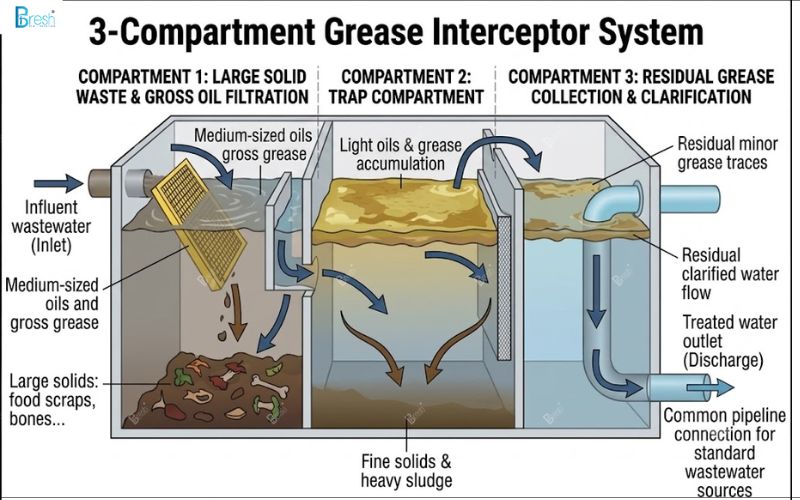
The grease interceptor is designed with 3 main compartments:
- Compartment 1: Large Waste and Gross Oil Filtration: This compartment retains large solid particles such as food scraps and bones, which helps regulate the flow and minimize clogging within the drainage pipes.
- Compartment 2: Trap Compartment: Wastewater flows into this section where fats and grease, being lighter than water, float to the surface while heavier solids settle to the bottom. The wastewater, once separated from the bulk of the grease, is then transferred to the next compartment.
- Compartment 3: Residual Grease Collection: In this final compartment, any remaining residual grease is trapped and held back. The clarified water at the bottom is connected to a common pipeline shared with other standard wastewater sources and safely discharged into the environment.
Advantages and Disadvantages of Grease Interceptors
A grease interceptor is one of the effective solutions for treating grease-laden wastewater, especially in places with a high volume of grease discharge such as restaurants, hotels, and industrial zones. However, before deciding on installation, you should carefully weigh its advantages and disadvantages to determine the most optimal solution.
Advantages
- High Grease Separation Efficiency: This is the primary function of a grease interceptor in wastewater treatment. Operating on the principle of density differential between oil/grease and water, the grease interceptor is capable of removing most of the grease from wastewater, helping protect the drainage system and the downstream wastewater treatment facilities.
- Minimizing Environmental Pollution: By preventing grease from being discharged directly into the environment, grease interceptors contribute to protecting water sources, soil, and air, minimizing negative impacts on the ecosystem.
- Preventing Pipe Clogging: If left untreated, grease will accumulate over time and cause severe pipe blockages. Installing a grease interceptor significantly mitigates this risk.
- Simple Operation: The operating principle of a grease interceptor in wastewater treatment is straightforward and user-friendly, requiring no high-tech technical expertise to run.
Disadvantages
- High Initial Investment Cost: Compared to some other basic wastewater handling methods, installing a grease interceptor requires a higher upfront investment cost.
- Installation Space Requirement: Grease interceptors are typically quite large, meaning they require a certain amount of space for installation and operation.
- Mandatory Periodic Maintenance: To ensure operational efficiency, grease interceptors must be cleaned and maintained periodically. Neglecting this will generate foul odors, and the trap itself can become clogged. A heavy accumulation of fats and grease inside the tank can eventually lead to overflow.
- Inability to Achieve 100% Removal: Although the separation efficiency is very high, no grease interceptor can completely eliminate all traces of oil and grease from wastewater. A small amount of grease may still remain, requiring additional treatment measures.
Here is the English translation of the text, keeping your original formatting and style intact:
Classification of Grease Interceptors in Wastewater Treatment
Grease interceptors in wastewater treatment are classified based on their scale, capacity, and manufacturing materials.
Classification by Scale and Capacity
Based on the scale and treatment capacity of wastewater, grease interceptors are divided into two main types:
- Point-of-Use Grease Interceptors (Local Grease Traps): These are compact devices, typically installed directly beneath sinks or commercial dishwashing areas in restaurants, hotels, and commercial kitchens. Point-of-use grease traps feature a simple design, are easy to install and operate, and are ideal for small-scale wastewater treatment systems.
- Centralized Grease Interceptors: These are larger-scale systems used to treat massive volumes of wastewater from industrial zones, factories, high-rise buildings, or large restaurant clusters and central kitchens. Centralized grease interceptors are usually designed with multiple compartments and complex filtration systems to ensure high treatment efficiency.
Classification by Material
Currently, the market offers various types of grease interceptors made from different materials, including:
- Composite Grease Interceptors: Manufactured from high-strength composite materials, these units resist chemical corrosion and offer excellent thermal insulation. Composite tanks are frequently used in wastewater treatment systems that demand high durability and aesthetic appeal.
- Stainless Steel Grease Interceptors: Stainless steel tanks offer the advantages of being rust-proof, easy to clean, and highly heat-resistant. However, the cost of stainless steel interceptors is typically higher than that of other materials.
- Plastic Polyethylene Grease Interceptors: Plastic tanks are lightweight, making them easy to transport and install. However, their durability is generally lower compared to composite or stainless steel options.
- Concrete Grease Interceptors: Concrete structures are highly durable and possess heavy load-bearing capacities, making them the standard choice for large-scale industrial wastewater treatment systems.
When choosing a grease interceptor, you should evaluate the scale and characteristics of your wastewater source, installation conditions, and budget to select the most optimal solution.
See more: How to treat industrial wastewater from A to Z
Common Types of Grease Interceptors on the Market Today
There is a wide variety of grease interceptors available today, rich in types and sizes to meet diverse usage needs. Below are some of the most common types of grease interceptors used in wastewater treatment.
Residential Grease Interceptors
For households, using a grease trap is highly essential to protect the drainage piping system and prevent clogs. Residential grease traps are usually small, roughly matching the size of a kitchen sink. This type of trap is easy to install and clean—typically installed above-ground right under the sink—serving as an “excellent assistant” for homemakers to filter out rice, food remnants, and avoid grease-induced pipe blockages.
Restaurant Grease Interceptors
Restaurants generate a massive volume of oil and grease daily, requiring the use of grease interceptors with much larger capacities than residential versions. This type of interceptor can be installed either above-ground or underground, integrated with trench drains within the restaurant’s wastewater treatment system to filter out trash, food residue, and grease.
Mini Grease Interceptors
Mini grease traps feature a very compact size and are typically installed above-ground under low-capacity sinks, such as those in apartments, small households, or micro-eateries. A mini grease trap has a straightforward structure, is easy to install and maintain, and provides good filtration for waste and grease in small-scale wastewater systems.
Industrial Grease Interceptors (Grease Interceptor Manholes)
Industrial grease interceptors, also known as grease interceptor manholes, have massive capacities reaching thousands of liters. They are commonly used in manufacturing plants and factories with heavy grease discharge, or in large apartment complexes utilizing a shared centralized wastewater treatment system. These systems are usually installed underground and feature dedicated piping networks to collect and channel the grease.
BioFix Fresh – Providing High-Quality and Reputable Grease Treatment Solutions
BioFix Fresh is a reputable unit with long-standing experience in providing grease treatment solutions for wastewater. Below are some of our trusted microbial products that deliver high grease treatment efficiency:
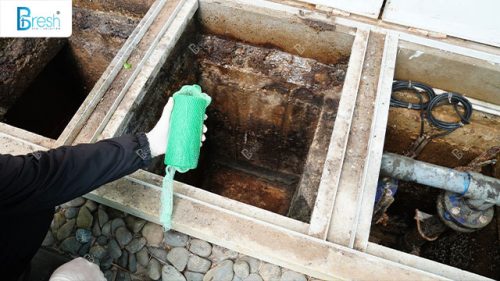
- BAC GB-1201 Microbial Product: A convenient block-form product. It is placed directly into grease traps or grease pits and dissolves gradually, releasing beneficial microorganisms to decompose grease. Additionally, it lowers BOD and COD levels very effectively.
- BAC GT-1202 Microbial Product: A highly active liquid microbial product designed to quickly decompose fats, oils, and grease within wastewater drainage systems.
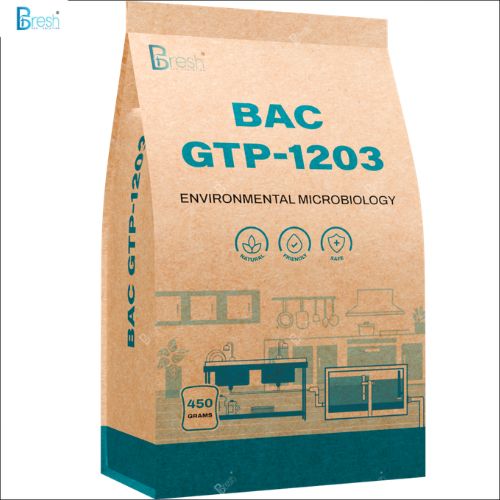
- BAC GTP-1203 Microbial Product: A specialized powder-form product used to treat grease accumulation in grease traps. The bacterial strains in spore form are capable of breaking down hardened grease, decomposing fats and other organic matter, and controlling foul odors effectively.
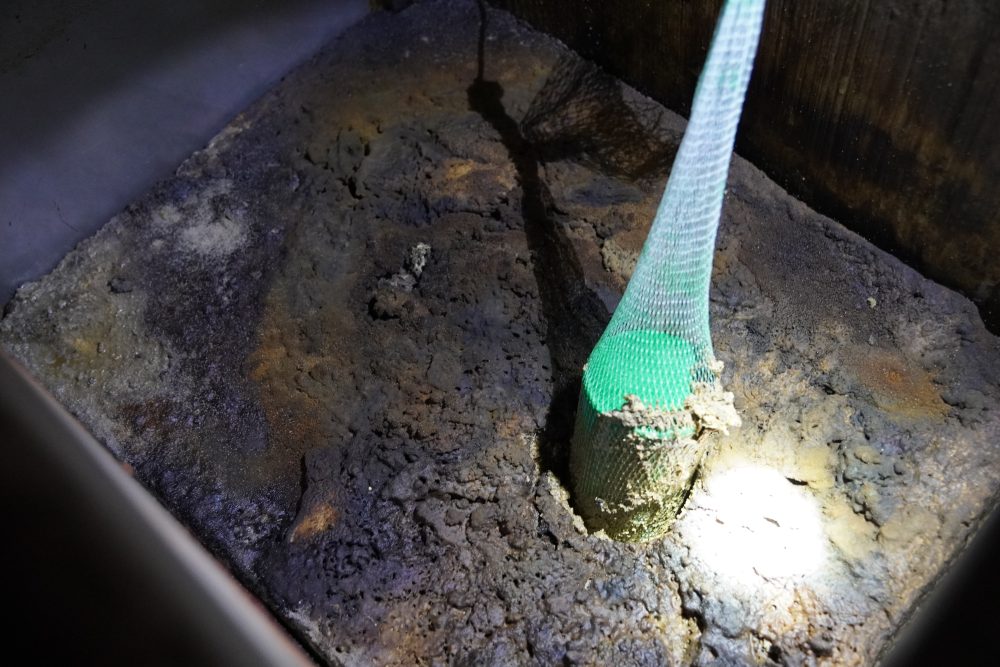
For customers looking to maintain grease interceptors in wastewater treatment or address overall grease management issues, BioFix Fresh is your most trusted partner. We deliver optimal wastewater treatment solutions tailored specifically to the unique characteristics of each industry and the requirements of our customers.
Contact BioFix Fresh today for a consultation on the most suitable product!
BIOFIX FRESH TECHNICAL TRADING COMPANY LIMITED
Hotline: 1900 988 949
Email: info@biofixfresh.com
Address: 71 DH 607 Road, Group 2, Ben Tuong, Ben Cat Ward, Ho Chi Minh City.